
APEX EXPO 2025: Industry Leaders Envision the Future of Immersive IFE
Originally published on APEX
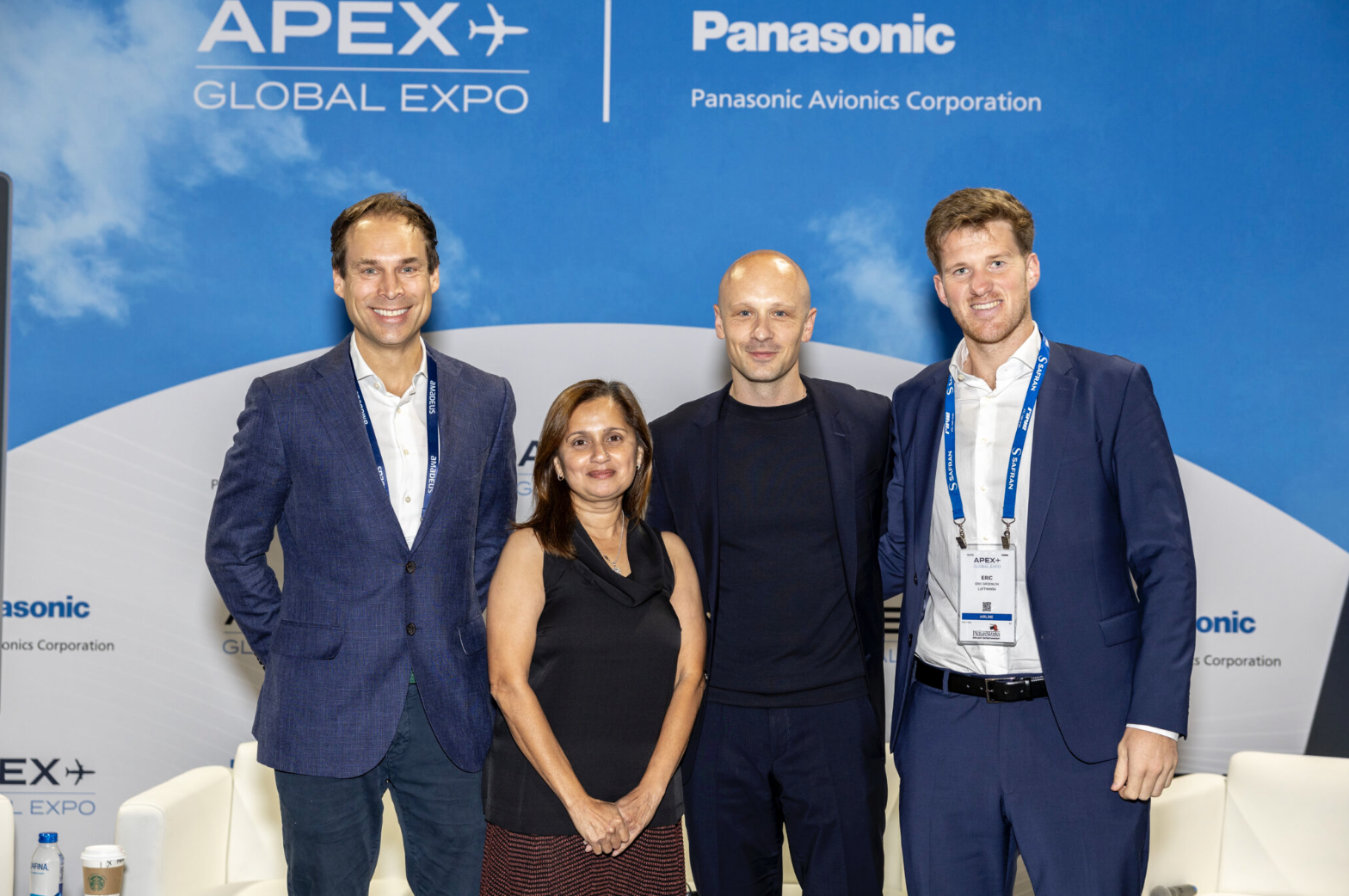
At the 2025 APEX Global Expo, immersive technology took center stage. Thursday’s panel, moderated by MSM.digital Deputy Managing DirectorCamillo Stark, brought together three leaders with distinct perspectives: Meta Head of XR in Travel Bastian Schütz; Lufthansa Group Senior Director for Customer Journey Development Eric Groenloh; and Thales InFlyt Experience Vice President for Strategic Partnerships and Business Development Maneesha Bhate.
Together, they explored how augmented reality (AR), virtual reality (VR), and the metaverse are reshaping in-flight entertainment (IFE), redefining airline operations, and creating new revenue opportunities. The discussion highlighted both the transformative potential and the practical challenges of bringing immersive technologies into the passenger journey.
Airline Perspective: New Experiences and New Revenue
Stark opened the discussion by asking why Lufthansa is exploring XR (extended reality) and what benefits they expect it to bring. Groenloh said that for Lufthansa, XR is both a way to elevate passenger experience and represents a potential shift in the business model for in-flight entertainment. The priority is creating something new and memorable for travelers.
“The first instance has two components,” he explained. “One is bringing a new element to the customer experience on board. The second is scalability and commercialization. Watching an NBA game in VR is a totally new experience. The social component is important as well. On long flights, passengers have time, and rethinking how they spend it gives us great opportunities.”
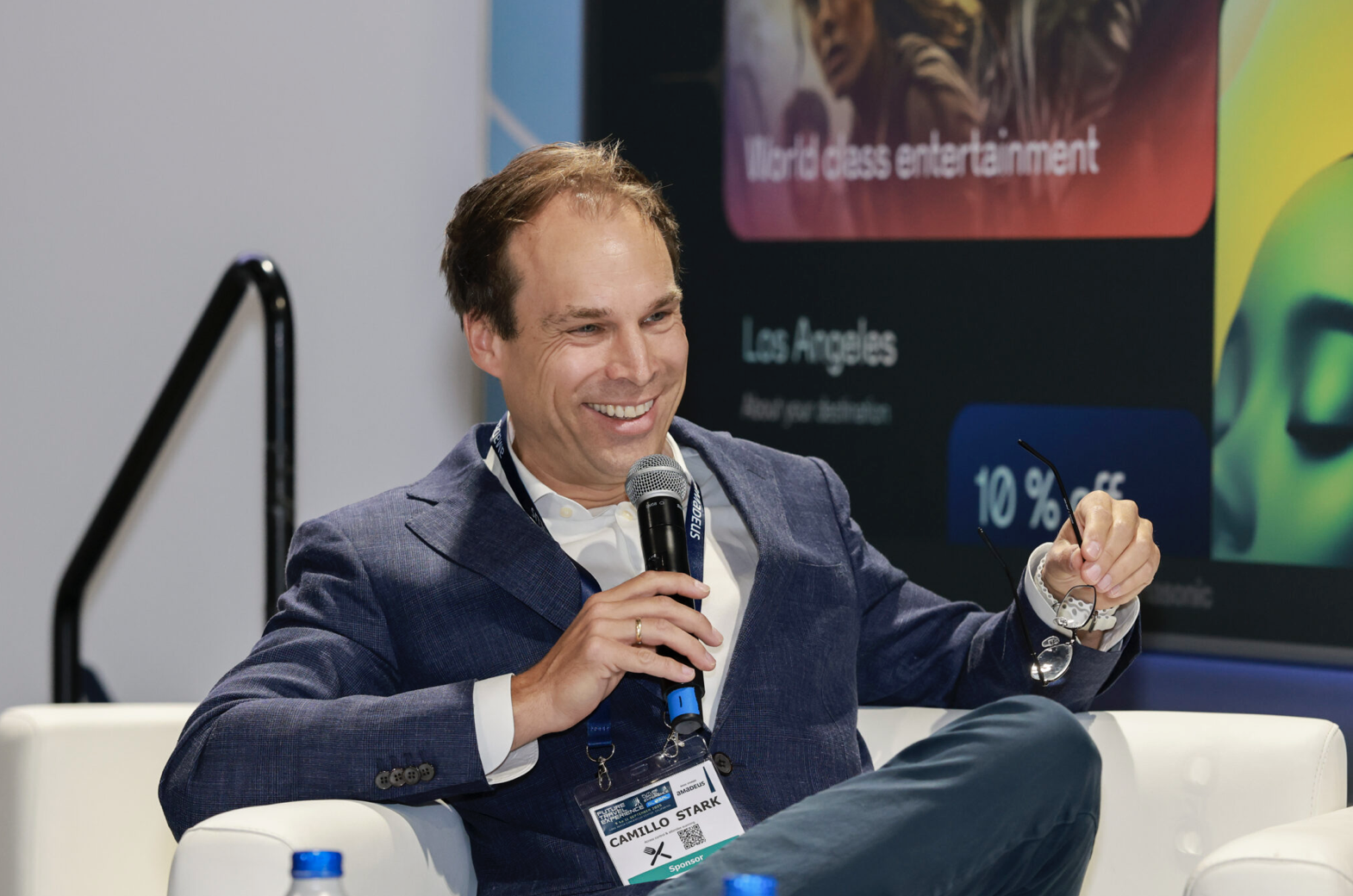
Pictured, MSM.digital Deputy Managing Director Camillo Stark. All images via Caught in the Moment Photography
Groenloh then categorized Lufthansa’s challenges and opportunities into three areas: certification and safety, content partnerships, and maintainability. “If we, as an airline, provide these glasses, there are safety elements and certification topics we need to address. Content is crucial. If you have a cinema screen no one else sees, the content has to be excellent.”
Maintainability may be the most difficult piece, with the transfer and charging of batteries needing to play a part. Groenloh envisioned a future without traditional seatback screens, replaced by XR devices that reduce weight and save space: “That would be pure cash for us,” he said. But with aircraft lifecycles stretching up to 30 years, Lufthansa must balance long-term assets with fast-moving consumer technology through flexible solutions.
Technology Perspective: The Next Evolutionary Step
Meta’s Schütz believes immersive technology is the next natural step in computing and entertainment. “Immersive technology is the next evolutionary step of consuming content,” he said.
“Your computer started as a talking machine in your basement, then moved into your pocket with the smartphone. The next step is closer to your senses. People ask, what comes after the smartphone? We believe virtual, mixed, and augmented reality are the answer.”
Schütz pointed to Meta’s Orion prototype AR glasses, launched a year ago, as an indicator of where the industry is heading. “It is about a small device with a built-in display that allows you to augment your physical space with virtual elements. It’s still a prototype, but it shows the direction.”
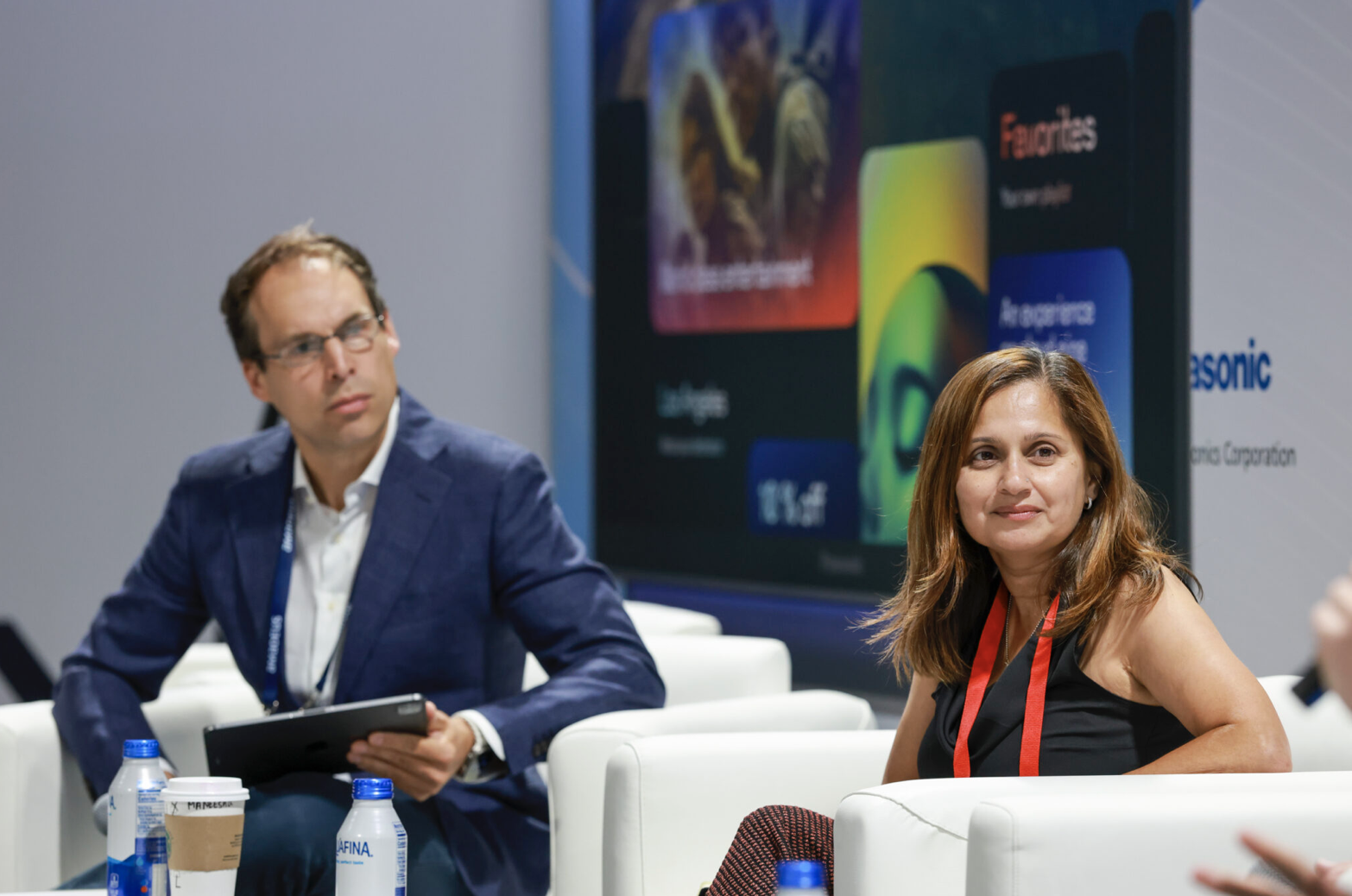
He underscored Meta’s commitment with numbers: “Last year, we invested US$42B into research and development. This year, we will invest $60B. That is 2.5 times NASA’s budget. This is a serious business, and we strongly believe it is the next stage of how you will consume content while you travel.”
For Schütz, XR adoption hinges on usability and form factor. “Right now, our Quest 3 device weighs 500 grams. People use it for an hour, which is promising. But the moment we achieve a glasses-like form factor, passengers will be able to watch movies for two or three hours comfortably. That will also solve logistical challenges of bringing, cleaning, and storing devices on board.”
Supplier View: Converting Cost Centers into Profit Centers
Bhate shared Thales’ perspective as a system provider tasked with aligning airline goals, passenger expectations, and technology integration.
“As an IFE supplier, we are in the middle of all this,” she said. “We work with airline partners and know which levers are most important to them. The question is always, how do we deliver extraordinary experiences? The next frontier is XR. With early investment, we can help airlines achieve outcomes in customer experience, operational excellence, and revenue.”
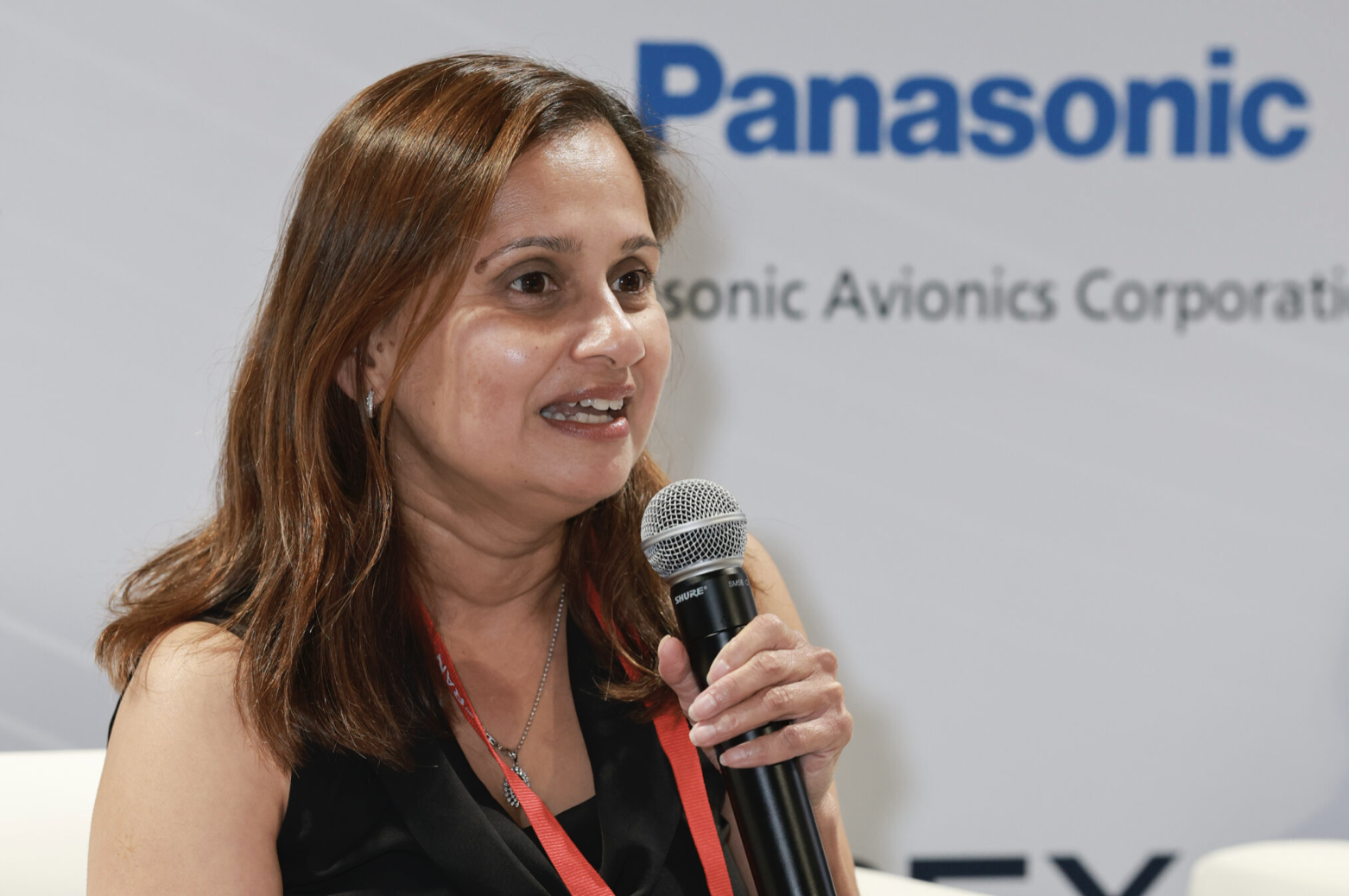
She explained that XR could turn IFE from a cost center into a profit driver. “Passengers want to play games, shop in new ways, or experience destinations differently. Airlines want to improve maintenance and efficiency. This would result both in ancillary revenue and cost savings. XR unlocks these outcomes.”
Bhate said Thales’ cloud-based IFE platform FlytEdge was already set up to support technology innovation in the cabin, such as the introduction of XR headsets. Built with openness and data flexibility in mind, “It uses internet standards so integration is easy, and it’s agnostic for data delivery,” she explained. “You need fresh data and applications to keep experiences relevant. This is why we think it’s vital for the industry to keep its pulse on XR.”
Overcoming Challenges
Across the panel, the speakers agreed that the obstacles facing XR adoption are significant, but not impossible. Usability emerged as a central concern. “Every time you say XR, people think of VR headsets,” Bhate noted. “I can’t imagine my mom wearing one. We need to overcome usability challenges and adapt for aviation, which is very different from your living room.”
Schütz reframed them as opportunities. “The form factor is key. As devices get smaller, logistics and passenger adoption improve. Passengers’ needs are changing. Immersive tech is coming. It will change how people engage with content. Smart glasses are being developed by every major tech company for a reason.”
Groenloh emphasized partnerships, particularly for content. “We are looking at working with digital partners like sports broadcasters and streaming platforms. The content has to be compelling for this to work.” Bhate added that integration with aircraft systems is essential for safety, particularly when passengers are immersed in virtual experiences. “If I’m immersed and turbulence hits, the system must alert me to buckle up. Safety integration is non-negotiable.”

The Next Decade of Immersive Travel
Stark asked the panelists to imagine XR ten years from now. Schütz envisioned a seamless “personal travel device” that integrates across the journey
“The journey starts when you book your ticket,” he said. “Your smart glasses help you navigate the airport, integrate with the airline system on board, and provide personalized entertainment. It will be your personal travel companion.”
Groenloh saw value beyond entertainment. “We used VR headsets to preview our new first and business class seats with loyalty members. It’s a selling tool as well. Customers can experience the product at home before buying.”
Bhate argued that integration will be key. “Passengers will bring personal travel devices, and airlines will provide the infrastructure to integrate them with IFE. People may trust their phone for payments, but for cinematic entertainment, they still want a larger screen or immersive device. Once integration is seamless, more applications will follow organically.”
Training, Accessibility, and Crew Involvement
As the panel closed, they turned to questions from the audience. APEX Insights Editor Stephanie Taylor asked about cabin crew training and passenger support. Groenloh explained that during Lufthansa’s test flights, additional staff were present to guide passengers, but scaling would require an intuitive design. “It needs to be as easy as using a phone. Crews’ main role is safety. We cannot burden them with tech support.”
Schütz added that intuitive design was already delivering results and only a short introduction manual or video was needed. “We saw high satisfaction when headsets required no controllers and only hand tracking. Passengers quickly figured it out themselves.”
Bhate suggested that traditional IFE could play a training role. “You can use announcements, videos, or games to onboard passengers into XR. Depending on the demographic, their barriers to usage will differ. If you augment what they already have, adoption becomes easier.”
Accessibility was another theme. “XR can actually make travel more accessible,” Bhate said. “It can adapt interfaces for people with different needs, or replace normal glasses to help passengers enjoy entertainment more comfortably.”
