
APEX EXPO 2025: Air India CEO Campbell Wilson Charts Bold Transformation Since Tata Acquisition
Originally published on APEX

All photos via Caught in the Moment Photography
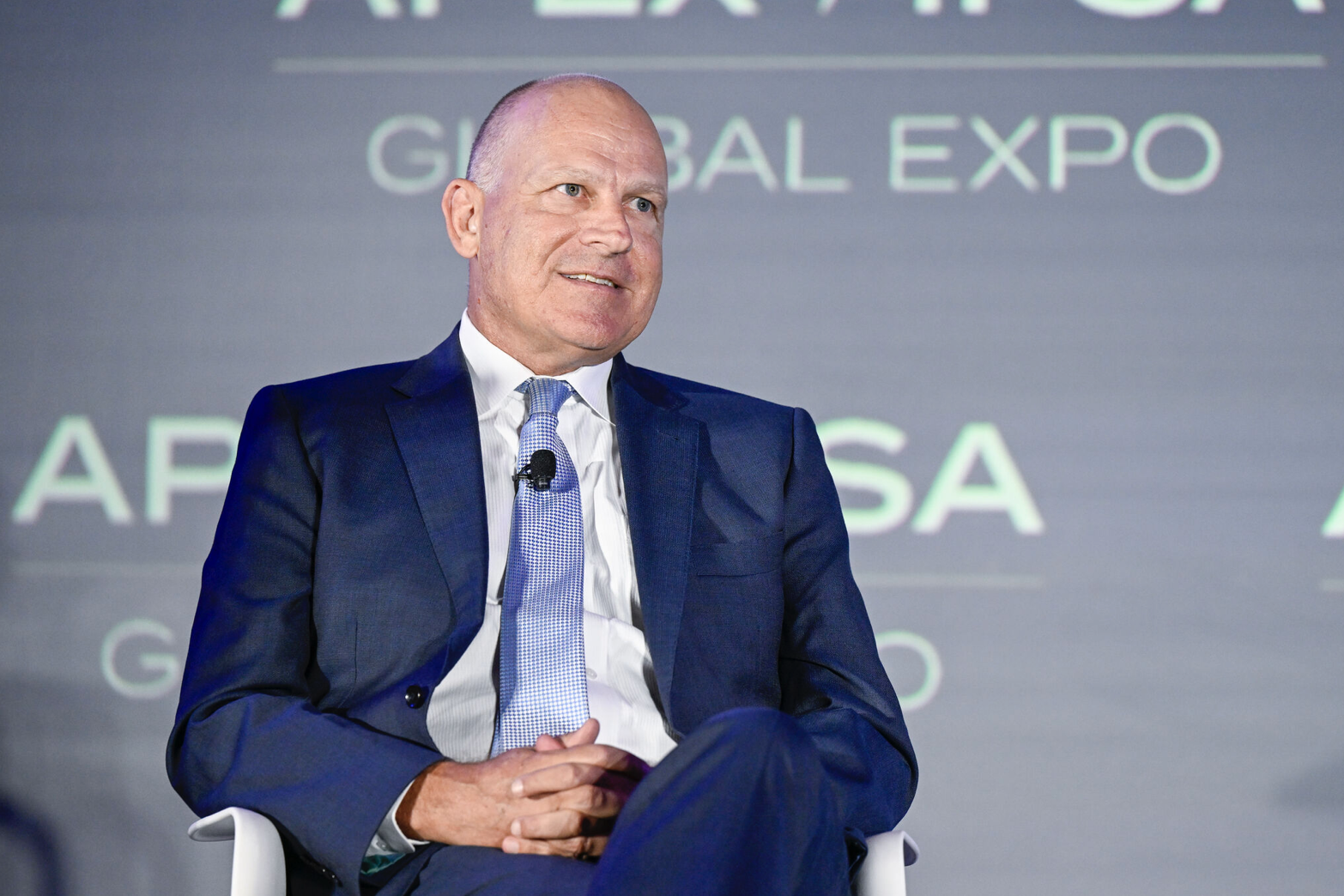
Air India CEO Campbell Wilson spoke about a bold digital transformation strategy during Tuesday’s CEO keynote at APEX Global EXPO 2025, highlighting its massive IT overhaul, early adoption of AI, and a full-fleet modernization program.
Moderated by BBC anchor Ben Thompson, the conversation centered on how modern infrastructure, real-time data, and cultural transformation will evolve Air India from a legacy flag carrier to a world-class airline. Wilson laid out a vision built on re-platforming 140 legacy systems, deploying AI across customer and operational touchpoints, and accelerating product consistency through one of the largest aircraft orders in aviation history.
Going Full Circle: Returning to Tata
Wilson began by speaking about Air India’s long history. The airline was founded in 1932 by JRD Tata, India’s first commercial pilot. It was nationalized in the 1950s and reacquired by Tata Sons in 2022. That “homecoming,” as Wilson described it, combines emotional resonance with business potential.
He shared some impressive figures about the size of the domestic Indian aviation market, which is the third-largest in the world. “India is a 1.4 billion person market, with GDP growing at 6 percent annually and aviation growing even faster at 8 to 10 percent,” Wilson explained. “The opportunity is massive, and so is the pride in restoring a national icon.”
For decades, Wilson said limited government investment had left the airline lagging. In contrast, privatization unlocked the ability to adopt profit-driven practices, invest in infrastructure, and align with market dynamics.
The Tata Group’s resources have provided the capital to fuel growth, but Wilson stressed that prestige alone is not enough. “First and foremost, this has to be a profitable business,” he said. “Only then can it credibly carry the national name.”
Scaling Up: Orders, Mergers, and Integration
Air India’s transformation involves both consolidation and expansion. Four carriers have been merged into two: full-service Air India, which merged with Vistara, and low-cost Air India Express, which merged with AirAsia India. The fleet has grown from fewer than 100 aircraft to more than 300, with Air India having ordered 570 aircraft.”
A key challenge has been restoring many aircraft, as their cabins were outdated. While nearly all of the carrier’s narrow-body fleet has been retrofitted, the retrofit process on its wide-body aircraft is just getting started. Wilson explained, “Within another two years, the onboard product will be consistently world class and in the NPS 50+ category.”
However, supporting such growth requires more than planes. Air India has made investments in training schools, simulators, maintenance bases, and engineering academies. “There had been a lack of investment for decades,” he said. “We are rebuilding the entire ecosystem to support the growth.”
The integration challenge involves both people and infrastructure. With four distinct cultures, a mix of public and private sector employees and process, full-service and low-cost carriers, Air India’s workforce had to adapt to new goals and methods.
Wilson noted that Air India had not recruited non-flight staff since 1999, but privatization reversed that trend, with more than 9,000 employees added in the past two years. His approach to attracting new staff has been to paint a compelling picture of the airline’s future, connecting national pride with personal career opportunities.
“Transformation is never smooth,” he said. “But Air India carries the national name, and everyone is emotionally invested in making it a source of pride again.”
Technology as a Catalyst for Innovation
For Air India, technology has been the cornerstone of its turnaround strategy. When Tata reacquired the airline, it was still operating on outdated systems that hampered efficiency and service. The carrier was the last in the world on a legacy SAP mainframe.
Over the past two years, Air India has replaced 140 IT systems from scratch, merged platforms across four airlines, and re-platformed nearly the entire operation onto next-generation infrastructure. That modernization has enabled innovation, including early adoption of AI. “Air India was among the first to deploy a ChatGPT-powered chatbot in 2023,” Wilson explained.

Today, the airline applies advanced AI across its operations. Supported by a new data lake architecture, the airline can integrate and analyze information in ways Wilson said he had never seen before at any other carrier. “We are not held back by legacy systems anymore,” Wilson said. “That allows us to leapfrog in many areas.”
Air India Ratings Improve More than Any Other Carrier Year-on-Year
Air India’s technology and service upgrades are already yielding measurable results. They recorded the strongest year-over-year surge in passenger ratings of any airline, based on more than one million verified flights across over 600 carriers worldwide, according to APEX-validated neutral data from TripIt by Concur.
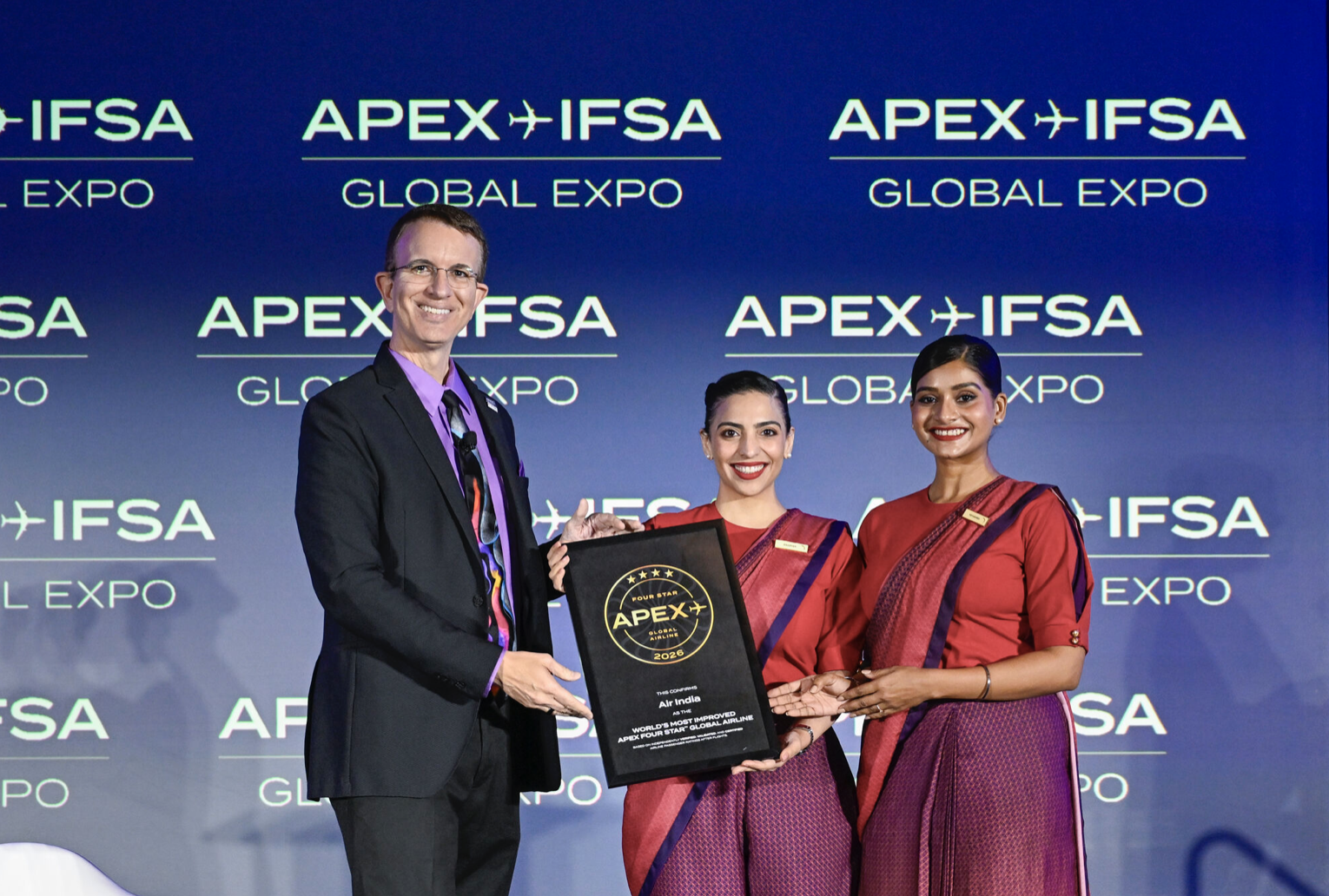
At the 2025 APEX IFSA Global Expo, Air India was recognized as the most improved airline year-over-year in the world according to verified passenger ratings.
APEX CEO Dr. Joe Leader confirmed that the airline has climbed into the upper half of the Four Star category, with some of its newest aircraft earning Net Promoter Scores above 50, levels comparable to leading global carriers. For Wilson, the recognition serves as external validation of the transformation underway and a signal that Air India is on track to reclaim its place among the world’s top airlines.
